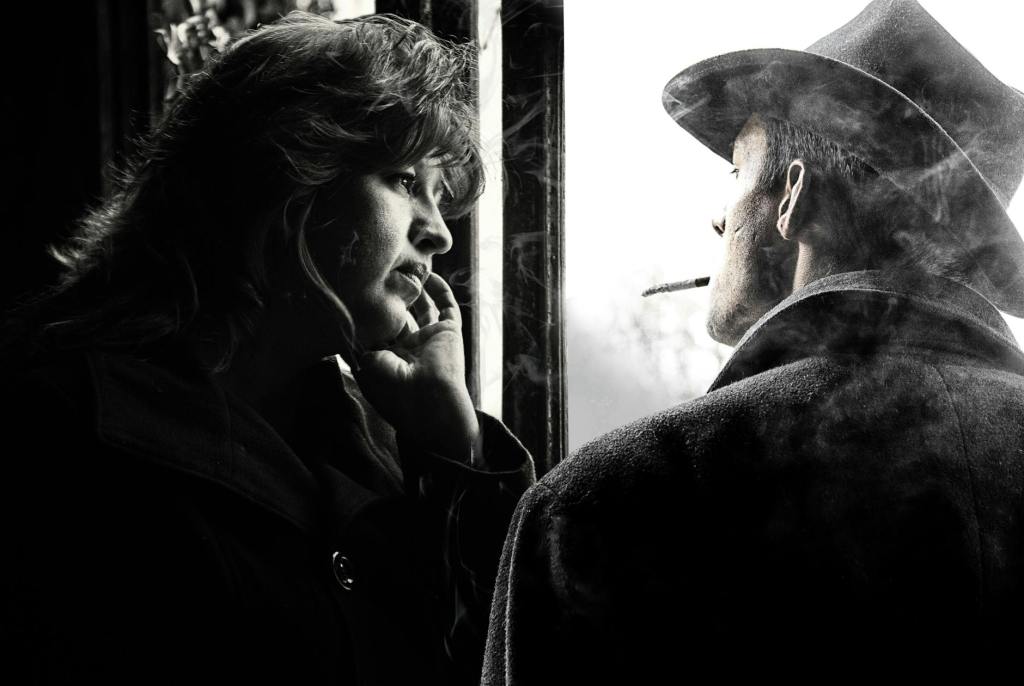
Is silence dying?
During medieval Japan, there was a blind priest named Hoichi who was famous for reciting the tales of the Taira clan, a powerful group of samurai leaders. His performances were so moving that people often cried when they listened.
One summer night, while Hoichi was practicing alone at the Amidaji temple, a samurai came and asked him to perform for his master. Hoichi agreed and was taken to a graveyard. There, he unknowingly played for the spirits of the Taira clan every night.
At the temple, seeing that Hoichi disappeared every night, the priest started to worry. After investigating, he realized that Hoichi was not performing for living people, but for the spirits of the dead.
These spirits didn’t belong in the world of the living, and their presence was harmful.
The priest wanted to protect Hoichi from their vengeful power.
So one night, to keep the spirits from finding Hoichi, the priest paints sacred Buddhist characters, called sutras, all over Hoichi’s body. They were meant to make him invisible to the spirits.
In haste, however, the priest forgets to cover Hoichi’s ears.
That night, when the spirits realize Hoichi isn’t coming to play for them. They come looking. They see Hoichi’s ears and, in anger, tear them off.
Luckily, Hoichi survives but is left earless. From then on, he became known as “Mimi-nashi Hoichi,” or “Hoichi the Earless.”
This story is part of Japanese folklore. It’s a reminder of how powerful silence can be. It emphasises the importance of protecting oneself from things that can’t be easily seen, heard or understood.
To me this story highlights something else — to protect oneself from things that can’t be seen or heard — study silence.
On a side note, if this was me, I’d try to use words to convince the samurai spirit. I feel communication solves everything. I’ve learnt, in some special cases though, that it makes things far worse.
I never liked silence as a response so much. There are too many words. And to use none is a waste of resources. Keeping a conversation good signals interest. It means, a) you’re an interesting person b) you are interested in the person you’re having a conversation with.
I’m constantly asking myself what’s left on the road where words end?
Is silence a place where conversations go to die?
Maybe it was because I was never very good with silence.
I mean, who is?
Silence though, as I’ve realized writing this article, is powerful.
Sometimes the most fitting reply to a futile argument, to an insult, a hateful comment, or a spiteful reaction. Speaking volumes in grief.
When used as a tool silence can deny the manipulator the reaction they crave. Withholding words can become a form of control, making the other person chase validation. In negotiations, silence can be a tactic—forcing the other party to make the next move.
In one of history’s most famous battles — the Battle of Guagamela 331 BCE — Alexander the Great used silence as a psychological weapon.
His army stood in absolute silence, waiting for the Persian army to make the first move. Darius III’s massive forces, used to war cries and intimidation, grew uneasy at the unnatural quiet. The silence created tension, uncertainty, and fear.
When Alexander finally commanded his attack, the Persians were already mentally shaken—and he crushed the much larger army.
Such a huge range of places that you could use silence and it would make more noise than any word ever would.
We think of words as our main form of communication. But what we don’t say, sometimes, communicate the loudest.
The Silent Interview That Made a Point
Performance artist Marina Abramović once conducted an experiment in pure silence. She sat in a museum, across from a stranger, without speaking, for a full minute. The only rule: no talking, just eye contact. Within seconds, people started crying. Some laughed nervously, others felt vulnerable, exposed.
Why?
Because we aren’t used to silence. We use words as a shield, but when forced to sit in pure quiet, we confront something deeper.
That one silent minute spoke louder than any conversation ever could.
You have to check out the music video here: How I became the bomb – Ulay, Oh with lyrics (Music Video)
The Paradox of Silence
What Frightens Us More—Words or Their Absence?
Are we more afraid of what’s said or what’s left unsaid?
The silence after a friend stops replying.
The empty comment section on an Instagram post.
The absence of applause for a speech we spent a week perfecting.
The way colleagues just blink after our presentation—no feedback, no reaction, just silence.
We crave words, not just to express ourselves, but to confirm we’ve been heard. And when they don’t come, the silence feels deafening.
We’ve made ourselves so uncomfortable with it too. Being around it, in it.
All these phrases, calm before the storm, a hush fell over the room, The stillness before disaster, a whisper in the wind, teachers expecting, “pin-drop silence”, left hanging in silence — although all of them do support my point here.
The Assasination of JFK
On November 22, 1963, the world was shaken by the assassination of President John F. Kennedy. But one of the most haunting parts of that day wasn’t just the news—it was the silence that followed.
Walter Cronkite’s famous news broadcast delivered the announcement with measured words, but it was the long pause he took, trying to collect himself, that made history.
It wasn’t the words mourning a fallen leader that carried the most weight—it was the collective, breathless silence of a nation in grief.
Why are we so uncomfortable in silence?
We are constantly stimulated today by social media. When you take away our devices – we begin to think. Silence makes us confront our thoughts and we have gone far away from being comfortable with that.
The lack of this stimulation can create an echo chamber of internal doubts and insecurities that push us into spirals of overthinking.
The added taboo to silence forces us to interpret silence as a rejection or failure.
Before humans developed spoken language, silence wasn’t awkward—it was survival. Early humans relied on body language, facial expressions, and gestures rather than spoken words.
Once humans developed language, silence took on a new role. Language made verbal connection the norm, and silence became the absence of that connection.
Tribes and early societies depended on spoken words to coordinate hunting, defend territory, and strengthen bonds.
Silence started signaling something was off—danger, exclusion, or uncertainty.
Here’s a nice article on the origin of silence.
This got me thinking—is silence really the absence of sound? Can there ever be a true lack of sound?
Our bodies hum with life—breath whispering, hearts drumming, the quiet churn of the gut. Sound exists everywhere, even if we cannot hear it.
And yet, when we honor the dead, we say, “Let’s hold a minute of silence.” Why?
If silence is truly empty, then what are we really doing in that moment? What are we acknowledging when we all stop speaking at once?
The Two-Minute Silence (1919) was introduced after World War I because words felt inadequate to capture the loss of millions.
The tradition of observing a two-minute silence on Armistice Day to honor fallen soldiers was proposed by Edward George Honey in 1919.
Disturbed by the celebratory manner of marking the end of World War I, Honey suggested a silent reflection instead.
This simple act of collective silence became a profound way for nations to express grief, respect, and unity without uttering a single word.
Weight of unspoken words in the real world
Silence is so different from it. Isn’t it a sound we choose to make? Unspoken yet deafening. We don’t just listen to what’s said—we listen to what’s left unsaid. We hear it.
Words left unsaid can be quite as beautiful as poetry. Rodin famously described sculpting as the act of removing everything that didn’t belong to the sculpture. Louis Armstrong believed that the most important notes were the ones he left unplayed.
In Japanese culture, silence in conversation is respected—a sign of thoughtfulness and emotional depth.
The “Silent Interview” That Spoke Volumes
Before he became the world’s most famous mime, Marcel Marceau was a French Resistance fighter. And how did he save Jewish children from Nazi capture?
Through silence.
As a young man, Marceau worked with the Resistance, helping children escape to Switzerland. He used mime to keep them quiet, entertaining them with silent performances while they hid. His silence quite literally saved lives—because making noise could mean being caught.
Later, he would say:
“Never get a mime talking, because he won’t stop.”
But back then, his silence was his greatest weapon.
Embracing words and the lack thereof
In Finland, there’s a cultural concept known as “ei tarvitse puhua,” which translates to “no need to talk.” This reflects a societal norm where silence is comfortable and doesn’t require filling. Finns often value quietness, viewing it as a sign of respect and thoughtfulness. This tradition may stem from the country’s vast landscapes and sparse population, where people became accustomed to solitude and introspection.
The Japanese concept of “Ma” refers to the meaningful silence or pause between words, actions, or objects. It’s an integral part of Japanese aesthetics and communication, emphasizing that what’s left unsaid can be as important as what’s spoken.This idea encourages listeners to read between the lines and appreciate subtlety, reflecting a cultural appreciation for nuance and restraint.
Silence isn’t empty—it’s a space where transformation happens. But in a world wired for noise, stillness can feel unsettling. Learning to be comfortable with silence isn’t just about tolerating it—it’s about rewiring your brain to thrive in it.
Silence can be thoughtful, meaningful, and intentional. It’s not always awkward or empty.
Powerful Methods to Get Used to Silence
1. The “Void Training” Method
Spend 5-10 minutes a day doing nothing—no distractions, no music, no phone. Just sit and observe.
Result:
- Activates your parasympathetic nervous system, reducing stress and increasing tolerance for stillness.
- Over time, your brain shifts from craving external noise to being able to sit with itself—reducing impulsivity and anxiety.
2. The “Echo Effect”
When someone speaks, pause before responding. Let their words settle.
Result:
- Teaches deep listening. Most people rush to fill the silence; learning to hold space deepens conversations and allows insights to emerge.
- Helps your brain slow down, process emotions better, and respond thoughtfully instead of reactively.
3. “Monk Mode” Training
Dedicate a few hours—or even a day—to complete silence. No talking, no screens, no distractions.
Result:
- What it does: Sharpens awareness—when words disappear, you become hyper-aware of thoughts, emotions, and surroundings.
- Increases neuroplasticity, rewiring your brain to feel at ease in quiet spaces instead of feeling the urge to “fill” them.
4. The “Verbal Fasting” Approach
Pick one day a week where you speak only when necessary. No mindless chatter, no small talk—just meaningful words.
Result:
- Trains you to speak intentionally, making your words more impactful.
- Brain transformation: Enhances self-awareness—you start noticing how much of what we say is unnecessary.
If you find yourself agreeing to things you never wanted to because you want to fill up the space with words, use — “Let me think about that.” or “I’ll get back to you on that.” Instead of responding immediately, embrace the pause.
Tell yourself: “I don’t need to fill this space”, as a reminder that silence is not awkward; it’s powerful. “I can listen without preparing my response.”, to be present. And “Less, but better.”, as a philosophy to say less, but mean more.
The Journey: What Changes When You Master Silence?
- At first, silence feels awkward. You feel the urge to check your phone, talk, or escape.
- Then, silence becomes observation. You start noticing your own thoughts, emotions, and patterns.
- Next, silence becomes comfortable. You feel at ease in your own presence, no longer needing external validation.
- Eventually, silence becomes power. Your words gain weight, your mind gains clarity, and your presence commands respect.
Engaging in periods of silence can have profound effects on the brain, facilitating various positive changes:
1. Promotion of Neurogenesis: Research indicates that silence can stimulate the growth of new brain cells, particularly in the hippocampus, a region associated with memory formation and emotional regulation. medium.com+1forbes.com+1
2. Activation of the Default Mode Network (DMN): In quiet moments, the brain’s DMN becomes active, allowing for self-reflection, memory consolidation, and introspection. This network supports our ability to understand ourselves and others, fostering empathy and creativity. pmc.ncbi.nlm.nih.gov
3. Stress Reduction: Silence can lower cortisol levels, leading to reduced stress and tension. This calming effect allows the brain to recover from external stimuli, promoting overall mental well-being. uplift.love
Incorporating silence into daily life, such as through meditation or mindful pauses, can harness these benefits, leading to a healthier and more adaptable brain.
When you stop fearing silence, you start owning it. And that’s where the real transformation begins.
 Said&Spoken